
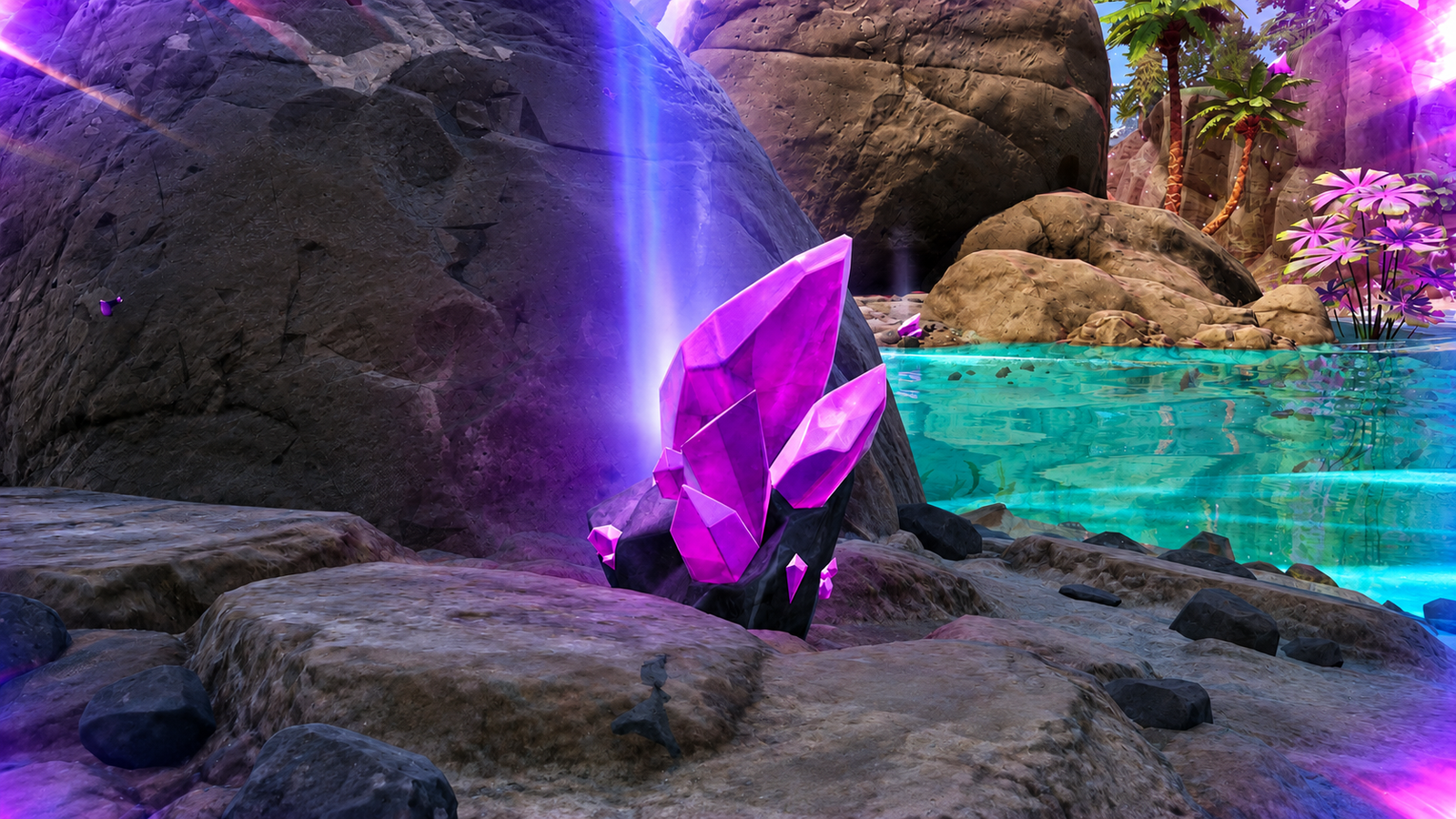
Fortnite’s Holofoil Power Hours should have been one of the best opportunities yet for players to find, collect, and level up the newly released Holofoil Sprites.
Instead, the event became a playground for sweats.
The nearly unlimited Shock Rock effects did more than make matches chaotic. They widened the skill gap between experienced players and everyone else.
Highly skilled players were able to use the increased mobility to attack faster, reposition instantly, escape losing fights, and chase down weaker opponents with very little risk. Casual and novice players, meanwhile, were left trying to track enemies flying through the air while also searching for Holofoils and attempting to survive.
That made the event feel unfair rather than exciting.
Shock Rocks Made Skilled Players Even More Dangerous
Movement mechanics are not automatically a problem in Fortnite. In the right setting, they can make matches faster and more entertaining.
The problem with Holofoil Power Hours was how easily experienced players were able to take advantage of them.
Sweats already tend to have better aim, movement, awareness, and reaction time. Giving them constant access to enhanced Shock Rock mobility amplified every one of those advantages.
A strong player could launch into a fight, gain immediate high ground, deal damage, and then bounce away before a casual player had time to react. If the fight started going badly, that same player could quickly disengage, heal, and return from another angle.
Casual and novice players did not receive the same practical benefit.
Technically, everyone had access to the Shock Rock effects. In reality, access does not equal equal advantage. A mechanic that requires fast reactions, precise movement, strong aim, and excellent spatial awareness will naturally benefit experienced players more.
The result was a temporary event modifier that made Fortnite’s strongest players even harder to eliminate.
Casual Players Could Not Finish Fights
One of the most frustrating parts of Power Hours was how difficult it became for an average player to finish an elimination against a skilled opponent.
A casual player might land several shots and finally gain an advantage, only for the opposing player to launch away instantly.
That opponent could then reposition, heal, or return from an unexpected direction.
For novice players, this was even worse. Tracking a player moving normally is already difficult for someone still learning Fortnite. Tracking an experienced player bouncing through the air, changing direction, and attacking from above was a completely different challenge.
Meanwhile, the skilled player often had little trouble following and eliminating the novice player.
This created a major imbalance: sweats could use Shock Rocks aggressively to close distance and secure eliminations, while casual players frequently watched damaged opponents escape before they could finish the fight.
The mechanic gave experienced players both an offensive and defensive advantage.
The Event Became a Casual-Player Hunting Ground
Power Hours were supposed to encourage players to search for Holofoils.
That naturally brought more collectors, casual players, and less experienced players into matches. Many of them were not entering specifically to chase high-elimination games. They were trying to locate the newly released Holofoil Sprites and make progress toward completing their collection.
Sweats knew those players would be there.
With powerful and readily available Shock Rock movement, skilled players could travel quickly, descend on occupied areas, and eliminate players who were distracted while searching for Sprites.
That changed the tone of the event.
Instead of feeling like a limited-time collecting opportunity, Power Hours often felt like an open invitation for experienced players to farm easier eliminations.
Players trying to explore or carry a Holofoil rarely had enough time to settle into a match. An enemy could appear suddenly, attack from above, and disappear just as quickly.
For casual players, there was almost no room to breathe.
Easier Holofoil Spawns Did Not Mean Easier Collecting
Fortnite made Holofoils easier to find during Power Hours, but that did not necessarily make them easier to collect or maximize.
Finding a Holofoil was only the first step.
Players still needed to survive, carry it, protect it, and make meaningful progress with it. That became extremely difficult when skilled opponents could move rapidly across the map and aggressively hunt anyone they encountered.
A casual player could finally locate the Holofoil they wanted, only to be eliminated moments later by someone using the Shock Rock effect to launch into the area.
The increased spawn rate therefore felt misleading.
Holofoils may have appeared more often, but the environment surrounding them made successful collection much harder for the players who needed the Power Hours most.
Sweats did not face the same struggle. Their movement skill and combat experience allowed them to use the modifier as a weapon. Casual and novice players were largely forced to survive it.
Equal Access Did Not Create Equal Gameplay
Some players may argue that the event was fair because everyone received the same Shock Rock benefits.
That argument ignores how skill-based mechanics actually work.
Giving every player the same tool does not mean every player receives the same advantage from it.
A highly experienced player can combine Shock Rock movement with accurate aerial shots, quick weapon swaps, strong building or positioning, and advanced game sense. A novice player may struggle simply to control where they land.
The mechanic rewarded players who were already good at Fortnite while punishing those who were still learning.
That is the opposite of what a collection-focused event should do.
Power Hours did not need to remove skill from the game, but they should not have dramatically increased the advantage experienced players already possessed.
How Fortnite Could Improve Future Power Hours
The Shock Rock concept could still work with better balance.
Fortnite could reduce the number of available charges, increase the cooldown between uses, or limit how quickly players can chain multiple launches together.
Another solution would be to restrict Shock Rock effects while a player is actively attacking. The movement could remain useful for transportation without making it so easy for skilled players to repeatedly dive into fights and escape whenever they lose the advantage.
Fortnite could also create a separate Holofoil-focused mode with reduced player aggression, more collection opportunities, or protected Sprite locations.
The best solution would be one that supports the actual purpose of the event.
If Power Hours are intended to help players collect Holofoils, the gameplay modifiers should make collecting more accessible—not make collectors easier targets.
Holofoil Power Hours Missed the Point
The biggest problem with Holofoil Power Hours was not simply that the matches were wild.
Fortnite is often at its best when things get a little ridiculous.
The problem was that the Shock Rock effects made the event significantly easier for sweats and significantly harder for casual and novice players.
Experienced players could chase, attack, escape, heal, and reposition with ease. Less experienced players struggled to track them, finish eliminations, or protect the Holofoils they had finally managed to find.
What should have been a celebration of the new Holofoil releases became an event where the strongest players gained an even larger advantage.
Holofoils were easier to see.
They were not easier to keep.
And for many casual players, Power Hours were not exciting, competitive, or fun. They were simply another reminder that giving everyone the same mechanic does not mean everyone has the same chance to succeed.
Instead, the event became a playground for sweats.
The nearly unlimited Shock Rock effects did more than make matches chaotic. They widened the skill gap between experienced players and everyone else.
Highly skilled players were able to use the increased mobility to attack faster, reposition instantly, escape losing fights, and chase down weaker opponents with very little risk. Casual and novice players, meanwhile, were left trying to track enemies flying through the air while also searching for Holofoils and attempting to survive.
That made the event feel unfair rather than exciting.
Shock Rocks Made Skilled Players Even More Dangerous
Movement mechanics are not automatically a problem in Fortnite. In the right setting, they can make matches faster and more entertaining.
The problem with Holofoil Power Hours was how easily experienced players were able to take advantage of them.
Sweats already tend to have better aim, movement, awareness, and reaction time. Giving them constant access to enhanced Shock Rock mobility amplified every one of those advantages.
A strong player could launch into a fight, gain immediate high ground, deal damage, and then bounce away before a casual player had time to react. If the fight started going badly, that same player could quickly disengage, heal, and return from another angle.
Casual and novice players did not receive the same practical benefit.
Technically, everyone had access to the Shock Rock effects. In reality, access does not equal equal advantage. A mechanic that requires fast reactions, precise movement, strong aim, and excellent spatial awareness will naturally benefit experienced players more.
The result was a temporary event modifier that made Fortnite’s strongest players even harder to eliminate.
Casual Players Could Not Finish Fights
One of the most frustrating parts of Power Hours was how difficult it became for an average player to finish an elimination against a skilled opponent.
A casual player might land several shots and finally gain an advantage, only for the opposing player to launch away instantly.
That opponent could then reposition, heal, or return from an unexpected direction.
For novice players, this was even worse. Tracking a player moving normally is already difficult for someone still learning Fortnite. Tracking an experienced player bouncing through the air, changing direction, and attacking from above was a completely different challenge.
Meanwhile, the skilled player often had little trouble following and eliminating the novice player.
This created a major imbalance: sweats could use Shock Rocks aggressively to close distance and secure eliminations, while casual players frequently watched damaged opponents escape before they could finish the fight.
The mechanic gave experienced players both an offensive and defensive advantage.
The Event Became a Casual-Player Hunting Ground
Power Hours were supposed to encourage players to search for Holofoils.
That naturally brought more collectors, casual players, and less experienced players into matches. Many of them were not entering specifically to chase high-elimination games. They were trying to locate the newly released Holofoil Sprites and make progress toward completing their collection.
Sweats knew those players would be there.
With powerful and readily available Shock Rock movement, skilled players could travel quickly, descend on occupied areas, and eliminate players who were distracted while searching for Sprites.
That changed the tone of the event.
Instead of feeling like a limited-time collecting opportunity, Power Hours often felt like an open invitation for experienced players to farm easier eliminations.
Players trying to explore or carry a Holofoil rarely had enough time to settle into a match. An enemy could appear suddenly, attack from above, and disappear just as quickly.
For casual players, there was almost no room to breathe.
Easier Holofoil Spawns Did Not Mean Easier Collecting
Fortnite made Holofoils easier to find during Power Hours, but that did not necessarily make them easier to collect or maximize.
Finding a Holofoil was only the first step.
Players still needed to survive, carry it, protect it, and make meaningful progress with it. That became extremely difficult when skilled opponents could move rapidly across the map and aggressively hunt anyone they encountered.
A casual player could finally locate the Holofoil they wanted, only to be eliminated moments later by someone using the Shock Rock effect to launch into the area.
The increased spawn rate therefore felt misleading.
Holofoils may have appeared more often, but the environment surrounding them made successful collection much harder for the players who needed the Power Hours most.
Sweats did not face the same struggle. Their movement skill and combat experience allowed them to use the modifier as a weapon. Casual and novice players were largely forced to survive it.
Equal Access Did Not Create Equal Gameplay
Some players may argue that the event was fair because everyone received the same Shock Rock benefits.
That argument ignores how skill-based mechanics actually work.
Giving every player the same tool does not mean every player receives the same advantage from it.
A highly experienced player can combine Shock Rock movement with accurate aerial shots, quick weapon swaps, strong building or positioning, and advanced game sense. A novice player may struggle simply to control where they land.
The mechanic rewarded players who were already good at Fortnite while punishing those who were still learning.
That is the opposite of what a collection-focused event should do.
Power Hours did not need to remove skill from the game, but they should not have dramatically increased the advantage experienced players already possessed.
How Fortnite Could Improve Future Power Hours
The Shock Rock concept could still work with better balance.
Fortnite could reduce the number of available charges, increase the cooldown between uses, or limit how quickly players can chain multiple launches together.
Another solution would be to restrict Shock Rock effects while a player is actively attacking. The movement could remain useful for transportation without making it so easy for skilled players to repeatedly dive into fights and escape whenever they lose the advantage.
Fortnite could also create a separate Holofoil-focused mode with reduced player aggression, more collection opportunities, or protected Sprite locations.
The best solution would be one that supports the actual purpose of the event.
If Power Hours are intended to help players collect Holofoils, the gameplay modifiers should make collecting more accessible—not make collectors easier targets.
Holofoil Power Hours Missed the Point
The biggest problem with Holofoil Power Hours was not simply that the matches were wild.
Fortnite is often at its best when things get a little ridiculous.
The problem was that the Shock Rock effects made the event significantly easier for sweats and significantly harder for casual and novice players.
Experienced players could chase, attack, escape, heal, and reposition with ease. Less experienced players struggled to track them, finish eliminations, or protect the Holofoils they had finally managed to find.
What should have been a celebration of the new Holofoil releases became an event where the strongest players gained an even larger advantage.
Holofoils were easier to see.
They were not easier to keep.
And for many casual players, Power Hours were not exciting, competitive, or fun. They were simply another reminder that giving everyone the same mechanic does not mean everyone has the same chance to succeed.
Comments
0No comments yet. Be the first!